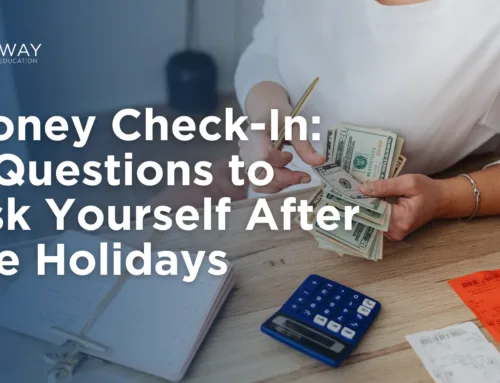
If you started 2026 feeling motivated about your finances… and now it’s mid-to-late January and that motivation is already fading, you are not alone.
This is the point in the year when real life kicks back in: routines get busy, bills show up, the “new year energy” disappears, and financial goals quietly get pushed to the side.
But here’s the good news: financial progress doesn’t come from perfect motivation; it comes from simple systems and realistic habits you can stick to over time.
Whether your goal this year is to build savings, get out of debt, improve your credit, or finally feel in control of your budget, here are 7 practical ways to make your smart financial goals stick for all of 2026.
1. Choose ONE main goal (not five)
One of the biggest reasons financial resolutions don’t stick is because people try to change everything at once:
-
Save more
-
Spend less
-
Pay off debt
-
Invest
-
Stop ordering DoorDash
-
Build an emergency fund
-
Improve credit
That’s a lot of pressure… and pressure usually leads to burnout.
Instead, choose one main focus goal for the next 90 days. Not forever. Just the next 3 months.
✅ Examples:
-
“Save $1,000 for emergencies”
-
“Pay off my smallest credit card balance”
-
“Track my spending every week”
-
“Stop overdrafting my account”
If you do want multiple goals, pick one “primary goal” and keep the rest as bonus wins.
2. Make your goal measurable (and realistic)
“Be better with money” is a great intention… but it’s hard to achieve because it’s not specific.
Instead of vague goals, turn your intention into something measurable.
Try:
-
“Save $50 per paycheck”
-
“Pay an extra $25 toward my credit card each month”
-
“Bring lunch to work 3 days a week”
-
“Review my bank account every Friday”
A goal that’s “small enough to succeed” will build confidence, which in turn creates long-term change.
3. Focus on consistency, not perfection
The truth is: most people don’t fail at financial goals because they don’t care. They “fail” because they assume one bad week means they’re off track. But money success works the same way health success does: progress is about consistency, not perfection.
If you go off budget for a week:
-
Don’t quit
-
Don’t shame yourself
-
Don’t ignore your account for the rest of the month
Just reset. Your budget isn’t a test. It’s a tool.
4. Build a plan for the moments you’re most likely to give up
We usually make financial goals in calm moments (like January 1). But we abandon them in stressful moments (like unexpected expenses, emotional spending, or a busy week).
So here’s the game-changer: plan for your “hard moments” before they happen.
Ask yourself:
-
What throws my budget off most often?
-
When do I tend to spend emotionally?
-
What usually makes me stop tracking?
Then create one simple “if-then” plan.
✅ Examples:
-
If I feel stressed and want to spend, then I’ll wait 24 hours before buying.
-
If I overspend one week, then I’ll do a quick reset on Friday.
-
If an unexpected bill comes up, then I’ll pause non-essential spending for 7 days.
This one step can make a goal stick all year.
5. Automate your success
Willpower fades, but automation doesn’t. If your goals rely on motivation every month, they’ll be harder to keep.
Automate what you can:
-
Automatic savings transfers
-
Automatic bill payments
-
Auto-pay on debt (even small amounts)
-
Round-up savings tools
-
Direct deposit split (checking + savings)
Even $10 a week automatically is progress, and it adds up more than people think.
6. Track your progress weekly (not daily)
Some people love daily tracking, but for most of us, it’s exhausting. A better option: a 10-minute weekly money check-in.
Pick the same day each week:
-
Friday after work
-
Sunday afternoon
-
Monday morning
In 10 minutes:
-
Check your account balances
-
Look at recent purchases
-
Confirm upcoming bills
-
Adjust one thing if needed
This is how money goals stick in real life: small check-ins that keep you aware.
7. Celebrate “boring” wins
Financial growth can feel slow, especially early on. But in reality, the “boring wins” are the ones that build long-term stability.
Celebrate things like:
-
Paying bills on time all month
-
Saying no to one impulse purchase
-
Tracking spending for 2 weeks in a row
-
Making one extra debt payment
-
Starting savings, even if it’s small
These wins aren’t small; they’re proof that your habits are changing. And habit change is how you win in 2026.
If your financial goals haven’t gone as planned this month, please hear this:
You didn’t fail.
You’re learning.
And you can restart today.
It’s not too late to have a strong financial year, and you don’t have to do it alone.
At Pathway Financial Education, we provide practical tools, workshops, and support to help you build habits that stick one step at a time.
Ready to make 2026 your strongest financial year yet?
Check out our upcoming workshops or sign up for a 1:1 session, and join us as we work toward stability, confidence, and freedom together.